
Where Do the Whales Go?
Every summer, humpback whales travel thousands of kilometres to the rich feeding grounds off Newfoundland’s coast. Trinity Bay and Bonavista Bay are some of the best places in the North Atlantic to see these incredible animals up close while they feast on the all-you-can-eat buffet of capelin and herring. Whale watching tours with Sea of Whales offer a front-row seat to this seasonal gathering. A question we often get: Where do the whales go when they leave Newfoundland each fall?
Winter in the Carribean
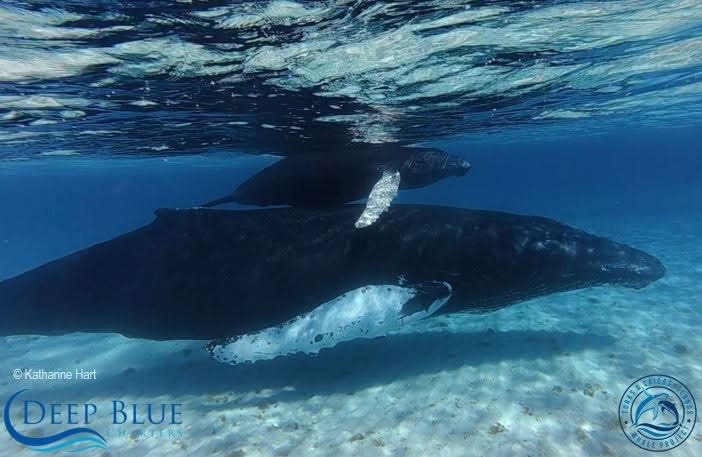
Humpback whales in the North Atlantic head south to the Caribbean for the winter months. It is in these calm, sheltered waters that they breed and birth their calves. There are several different hot spots for calving and breeding in the Caribbean. These include Turks and Caicos, The Dominican Republic and Puerto Rico. Our whales have been spotted in all of these areas! In fact, throughout the breeding season, whales will visit and revisit different areas.
For several years we have been collaborating with Cathy Bacon and Katharine Hart of the Turks and Caicos Islands Whale Project. To date we have matched 56 whales between our Sea of Whales catalogue and their breeding and calving grounds. Whales who feed in Trinity and Bonavista Bay, Newfoundland represent the second largest group of whales from any feeding ground in their region. If 56 of our whales were spending their winters in Turks and Caicos, it seemed we should make our way there for a visit with them!
Heading to Turks & Caicos
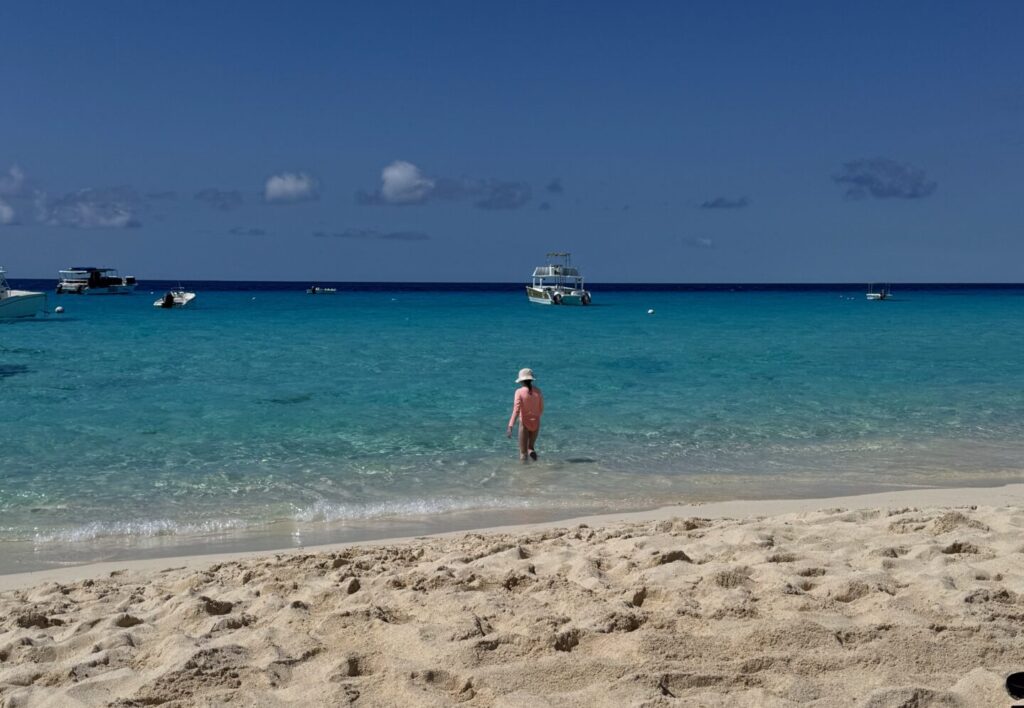
We set out in late February, sneaking out on a flight to Toronto between blizzards, and then flying first to Providenciales, and then onto Grand Turk. Grand Turk is 9.7 km long, rimmed by white sand beaches, turquoise water, and reefs as far as the eye can see. It was sunny and it was HOT! It didn’t take long to adjust to the heat, it was wonderful to get a break from the ice and snow and cold!
We had booked 4 days with Katharine’s company, Deep Blue Charters, which is very close to the cruise ship terminal in Grand Turk. The forecast showed some very windy days. We knew that our first day out might be the only day that we could get on the water before the worst of the wind set in. We opted to start at 6:30 am and go until lunch. It was a bright and beautiful morning and the sea was flat calm. Perfect conditions!
Swimming with whales
Not long after we headed out, we spotted our first whale. This one was not very relaxed and moved along quickly. We kept moving and found another with a calf. This pair seemed settled and we were able to slip in and quietly observe the Mom and calf. The water was impossibly clear and we got some great views of this pair. The whales also had great views of us! The calf swam straight to us at one point for a closer look.
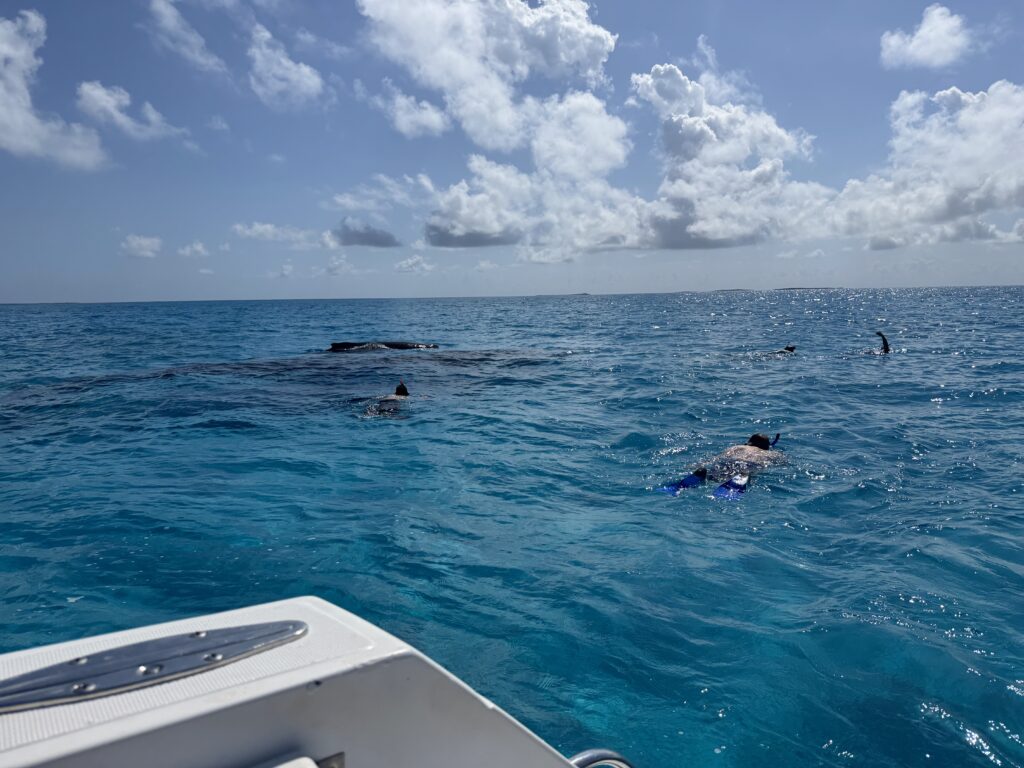
After several minutes with this pair they continued on their way and we got back in the boat. Before we knew it, it was time to head back so we all settled in for the ride. Kris, as usual, had his whale eyes on and spotted a blow! We edged over to the area to check it out. It was so shallow, only 10-15 feet of crystal clear water.
The Mom was very relaxed and after a few moments, it was decided that we could get in again. It was wild to see these two in such shallow water! Mom’s pectoral fins were dragging the bottom sometimes and she would have to tuck them up to get them out of the way. Often there wasn’t enough water over the Mom for the calf to glide above her so it would have to go to one side or the other. So serene and so perfect!
When it was time to leave this pair and come in for the day, we were all filled with such gratitude for this experience! Not long after our return the wind and the swell steadily increased. Sea conditions made it so we could not get back our on the water the rest of the week, but somehow, this one perfect morning was enough! We did see humpbacks on several occasions from the shore throughout the rest of our time there, but they were sadly too far away to get any photos that might show us who they were.
Staying Connected
Experiences like this remind us how connected the waters of Newfoundland are to the rest of the Atlantic Ocean. The whales we watch each summer in Trinity and Bonavista Bay travel thousands of kilometres between feeding grounds in Newfoundland and breeding areas in the Caribbean. Through collaborations like the Turks and Caicos Islands Whale Project, Sea of Whales continues to contribute valuable photo-identification data that helps researchers better understand humpback whale migration and behaviour.
When guests join us whale watching in Newfoundland, you’re not only experiencing an unforgettable encounter with these ocean giants, you’re also helping support global research that protects them!
This entry was posted in Sea of Whales Blog by Sea Of Whales Adventures. Bookmark the permalink.